
St. Louis, Missouri
Garage Door Panel Replacement in St. Louis, MO
Our local garage door professionals replace dented, cracked and rusted sections in St. Louis. Call about the damaged panel; your technician checks the surrounding hardware and identifies a compatible section before replacing parts and testing the door.
- Calls answered 24/7
- Scope and price explained first
- Serving St. Louis and nearby
What Garage Door Section Replacement Covers
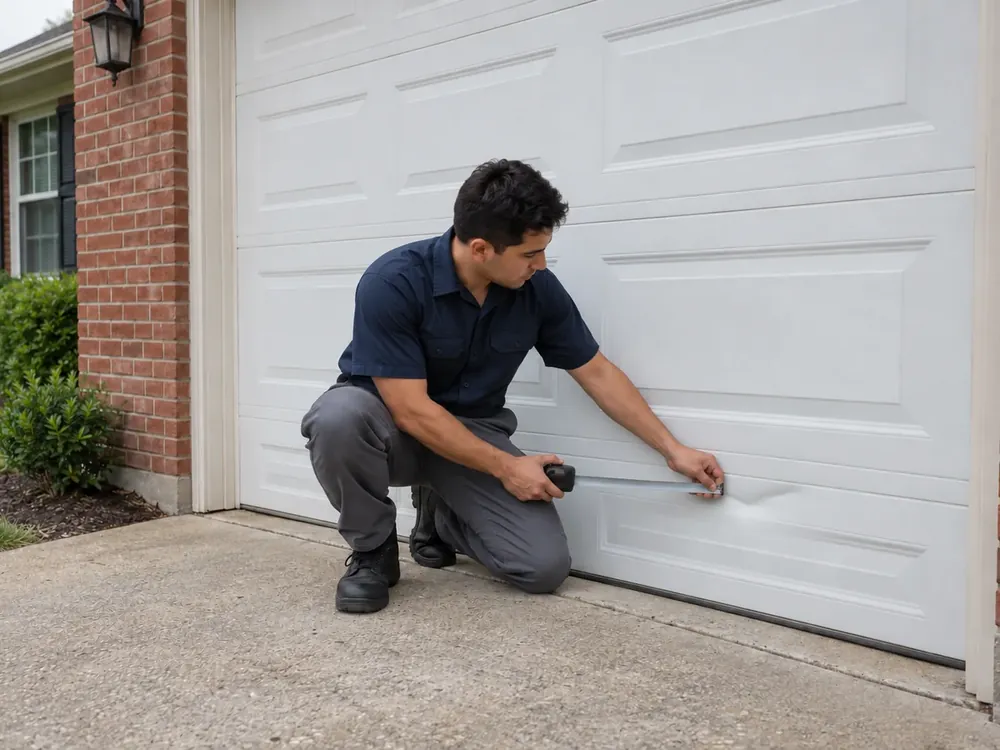
- Damage inspection: Your technician checks dented, cracked or rusted sections and the hinges connecting them, looking for damage beyond the visible mark from a car or ball.
- Section matching: Garage door replacement panels must fit the existing model, dimensions and connections. The check includes color and surface pattern, with any visible difference explained before ordering.
- Hardware adjustment: Hinges and rollers on neighboring sections get checked and aligned so the replacement moves with the rest of the door without catching.
- Bottom seals: Your technician inspects weatherstripping for the bottom of the garage door and its retainer, the channel holding the seal, replacing damaged pieces where needed.
- Replacement decisions: Widespread damage or an unavailable matching section may make a new garage door more practical. After section replacement, balance, full travel and safety reversal get tested.
Panel Damage That Needs an Inspection
Dents, cracks and movement changes need a section inspection to distinguish surface damage from a weakened door.
| What you notice | What it usually means | What to do now |
|---|---|---|
| Dent or crack after a car or ball hit | Impact may have damaged the panel and nearby hardware | Call and describe where the impact landed. |
| Rusted or rotted bottom section | Material may be weakening near the floor | Avoid loose edges and arrange an inspection. |
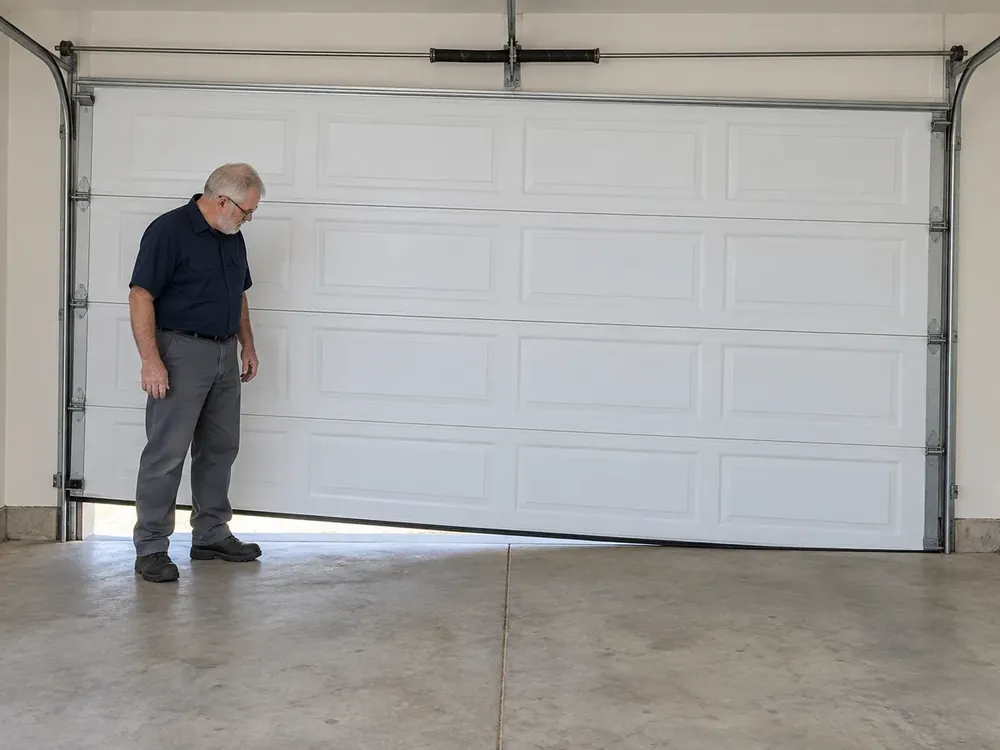
| Daylight under the closed door | A worn seal, distorted section or uneven floor | Share the gap's location during your call. |
| Section bows during movement | The panel or its supports may be failing | Stop cycling the door and stay away. |
| Hinges pulling away from a section | The attachment area may no longer hold securely | Leave the door still; do not tighten damaged connections. |
How Your Technician Restores the Damaged Section
- Check: Your technician examines the damaged section, hinges, bottom seal and struts, the reinforcing bars across the door. Springs, lifting cables, drums, tracks, rollers and opener sensors also get inspected.
- Adjust: Hinges and rollers beside the damaged section get aligned to preserve the joints and roller path. Your technician checks how the new section will meet the existing ones.
- Replace: The damaged panel gets exchanged for a compatible section, with a new bottom seal when needed. Only failed or incompatible parts identified in the scope get replaced.
- Test: Your technician checks hand balance, including whether the door stays halfway open, then runs a complete opener cycle. Travel and force settings get checked, and the floor-level photo-eye sensors are tested for reversal and full closure.
The replacement section should follow the others without bowing or catching, and the door should close evenly along the bottom. Call again if a joint binds, a gap appears or movement changes.

Arranging Your Panel Replacement Visit
- Start with a call about the dent, crack or rust; describe the affected section and any change in movement without running the door again.
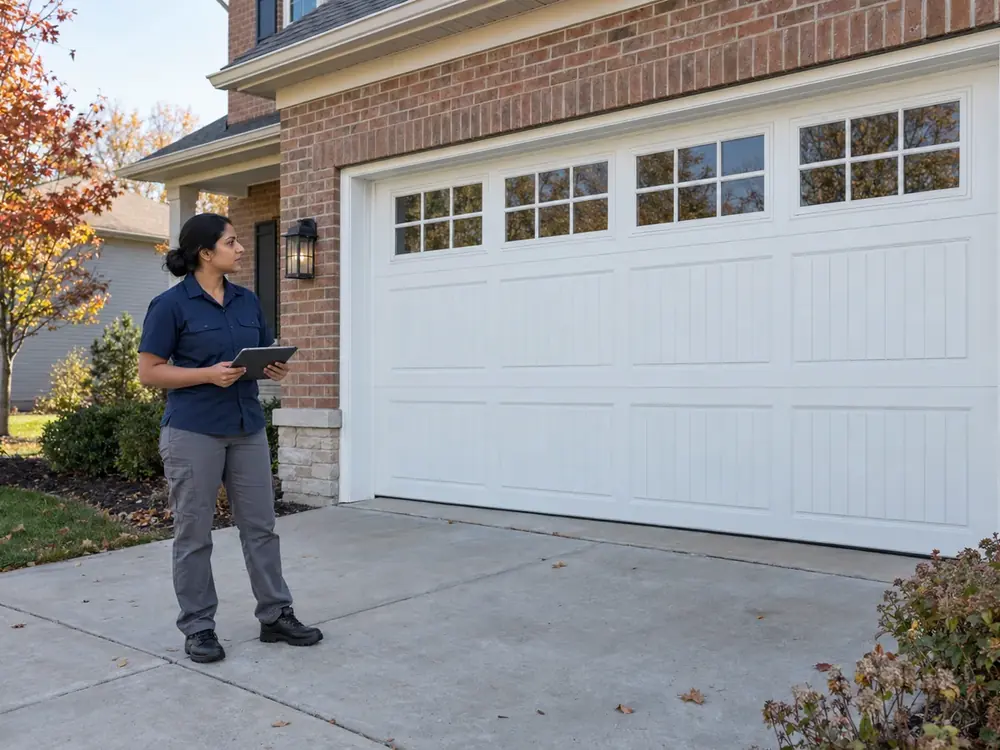
- Your technician handles the inspection, checks the model and measures the damaged section to identify matching parts and any related hardware damage.
- The proposed work and price are explained for your approval, including any difference in finish or need to consider a complete door.
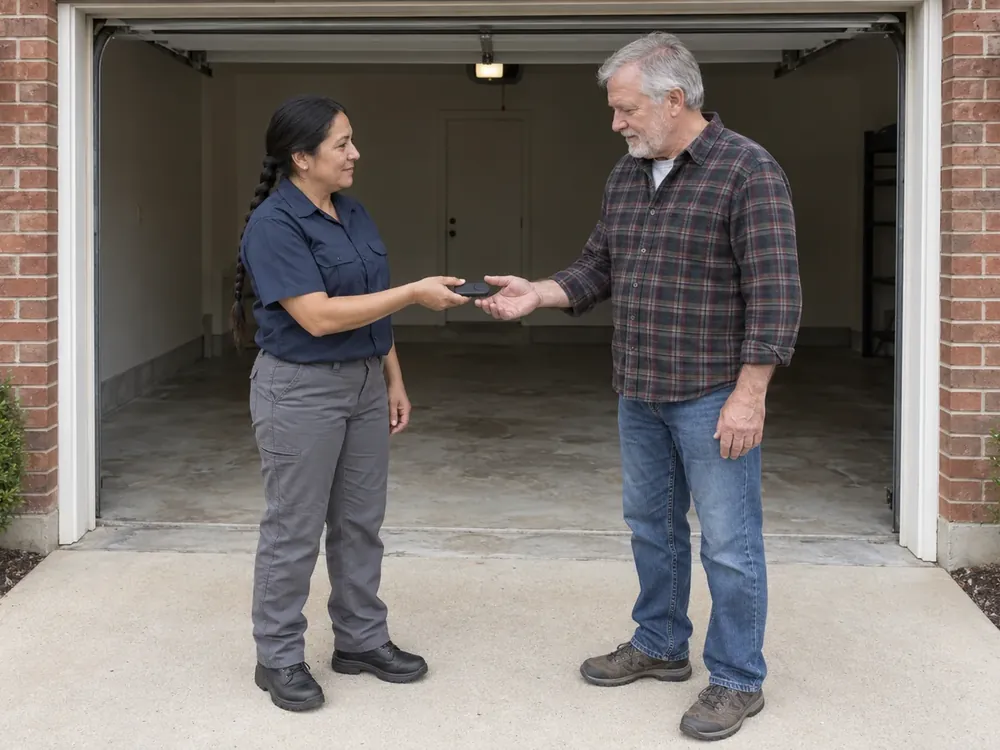
- Your technician installs the agreed section, adjusts adjoining hardware and tests balance, opener travel and safety reversal before showing you the finished door.
Panel Replacement Cost Factors in St. Louis
Panel replacement costs reflect the number of damaged sections, their width and weight, and the material and construction needed to match the door. A bottom section may also need a seal and retainer; damaged hinges or reinforcing bars add to the work.
Older models can require more parts research, while access around the door and after-hours work also shape the price. Your repair scope and price come from one of our local garage door partners before installation starts. Read about garage door repair cost factors for the differences between section work and other repairs.
Leave a Bowed Door Still Until Repair
A bowed section can strain hinges and rollers, so stop cycling the door and call for an inspection. For major damage, Clopay's guidance on damaged sections advises having a professional evaluate the door.
Keep hands away from cracked edges and section joints. Unplug the opener if its plug is safely accessible, and keep the doorway clear. Do not adjust springs, cables, drums or bottom brackets; their stored tension makes section removal dangerous.
Matching parts for an older door may no longer be made, which your technician checks before ordering. The CPSC's reversal guidance calls for immediate repair or replacement of an opener that fails to reverse on striking an object; your technician tests that protection after the damaged door is sound.
Other Services for Damaged Garage Doors
Section Replacement in St. Louis and Nearby Towns
Panel replacement serves doors in St. Louis, Kirkwood and Clayton. Describe the damaged section during your call, whether the door has one dent or several weakened panels.
Garage Door Panel Replacement FAQs
Can garage door panels be repaired?
Repair can address minor surface damage on garage door panels, while a cracked or deeply bent section may need replacement. Your technician checks whether the damage affects the panel's strength, joints or hardware attachments. The decision also considers how the door moves and whether a compatible section is still made for that model.
How do you find replacement garage door panels near me?
Matching starts with your door's model and section measurements, which your technician checks during the visit. Color, panel pattern, thickness and joint design also matter for a usable fit. Call to begin the inspection; you do not need to remove a section or collect those measurements yourself.
Will insulation foam panels fix a damaged garage door section?
Foam insulation inserts do not repair a dented or cracked structural section. Your technician separates insulation damage from damage to the door itself, then checks the section and its hardware. Any added or replacement insulation must suit the door, and a weight change calls for a balance check.
Does panel replacement affect a residential garage door torsion spring?
A change in section weight can affect spring balance, so your technician checks the spring system as part of panel replacement. A torsion spring stores lifting force above the opening. The replacement section must suit the door, and the finished door gets a hand balance check before opener testing.
When is installing a complete door better than replacing panels?
Complete replacement may make more sense when several sections are weakened or a compatible replacement is no longer made. Your technician compares the remaining sections, hardware and available parts before explaining the options. For garage door installation, panels and lifting hardware must work together as a matched system.
Call about a damaged garage door panel to arrange a section check, compatible replacement and balance tests for smooth movement and complete closure.
Call (314) 828-8488